
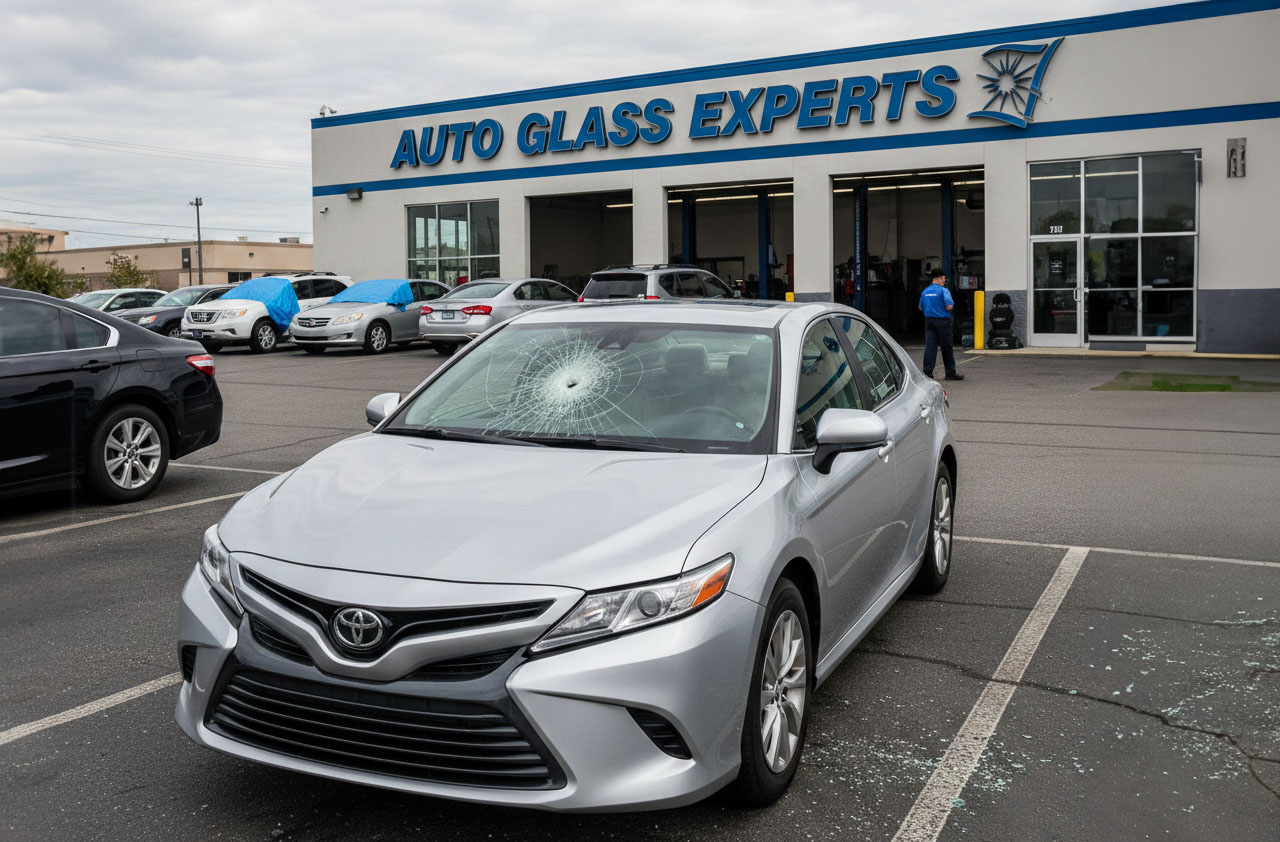
Your windshield is much more than a piece of glass. It protects you from weather and debris, keeps the vehicle’s structure rigid in a crash, and often houses critical sensors and cameras for safety systems like lane-keep assist, adaptive cruise control, and automatic emergency braking. A damaged windshield can reduce visibility, compromise structural integrity, and interfere with ADAS (Advanced Driver Assistance Systems) — so getting a correct repair or replacement quickly and correctly matters.
Getting an accurate estimate online saves time, reduces surprises, and helps you compare honest shops in your area. Below is thorough guide to using the AutoglassEstimator.com tool effectively so the quotes you see are as precise as possible.
Step-by-Step: Using Our Estimator Tool Effectively
- Enter your ZIP code first.
The estimator uses ZIP code to find shops and pricing in your local market. Urban, suburban, and rural areas have different labor and mobile service costs, so start here to make estimates relevant to your location. - Add your vehicle year.
Older and newer vehicles can require different glass types and labor. Newer cars may require OEM glass, special adhesives, or calibration services that affect price. - Select the make/brand of your car.
This narrows choices to the correct windshield shapes and options (heated glass, antenna in glass, HUD lines, etc.). Some brands use unique glass or sensor placements that change labor and part costs. - Select the model.
The model determines the exact windshield part number range and which trim-level features (HUD, rain sensors, heads-up display) are likely present. - Choose the body style (sedan, coupe, SUV, truck, etc.).
This helps avoid mismatches (for example, a different windshield curvature for a coupe vs. wagon) and ensures the shop recommends the proper part. - Indicate whether you’ll use insurance (or if you’re unsure).
If you plan to file with insurance, shops may handle billing for you and price differently because of insurer reimbursement rules. If you’re paying cash, you may be offered different glass options or discounts. Marking “unsure” lets shops propose both insurance and cash options. - Select which glass you need replaced (windshield, rear glass, side window, sunroof).
Different glass locations have distinct labor needs and parts — windshields often require recalibration work; sunroofs and rear glass may have different replacement processes and warranty terms. - Review recommended shops and compare.
The tool will present nearby shops with estimated price ranges, whether they offer mobile service, estimated wait times, customer ratings, and notes about OEM vs aftermarket glass and ADAS recalibration services. Compare these details — not just the bottom line. - Request an itemized quote and appointment availability.
When you select a shop, ask for an itemized written estimate that breaks out parts, labor, adhesives, ADAS calibration, and any deductible if insurance is used. Confirm appointment and mobile service details.
What Info to Have Ready For Your Appointment
- Vehicle Year / Make / Model / Body Style — for correct part fit and feature detection.
- Vehicle Identification Number (VIN) — optional but very helpful: the VIN can give exact factory options and part numbers, reducing mismatches.
- Clear photos — damage close-ups and wider shots from front/inside/outside. Include pictures of camera/sensor areas if those are near the damage.
- Which glass piece — windshield, rear, driver or passenger side window, sunroof, etc.
- Whether you want OEM (original) or aftermarket glass — OEM is typically more expensive but ensures exact fit and sensor compatibility; aftermarket can be less costly.
- Insurance details — carrier name, policy number, and whether you have a deductible. If you plan to use insurance, know your deductible and any requirements your carrier has for shop selection.
- Preferred timing or mobile service needs — if you need same-day or at-home service, state it upfront.
- Any ADAS concerns — if your vehicle has lane-keeping cameras, radar or HUD, mention it — calibrations can add cost and time.
How to Take Photos For The Repair Shop
- Take photos in daylight with minimal glare.
- Capture the entire windshield from about 10–15 feet away, then take close-ups of the damage.
- Photograph the damage from both outside and inside the vehicle.
- If sensors or cameras are near the damage, take a clear picture of those areas.
- Include shots that show vehicle make/model badges or license plate (optional) so shops can match the car.
Red Flags to Watch For When Using Other Quote Tools
- Extremely low prices that seem too good to be true — they often hide inferior glass, no warranty, or omitted calibration work.
- No itemized estimate — a good shop will break parts, labor, adhesives, and recalibration into separate line items.
- No warranty or a very short warranty — reputable shops provide at least a limited labor and leak/water intrusion warranty and a glass manufacturer warranty.
- Pushy insurance steering — some shops pressure you to use certain insurers or push for billing practices that benefit them, not you.
- Vague OEM vs aftermarket answers — confirm whether the quoted glass is OEM, OEM equivalent, or generic aftermarket. If OEM matters to you, make sure it’s explicitly stated.
- No proof of technician certification — for ADAS work or complex installs, technicians should be trained and shops should have the right equipment.
- Poor or no customer reviews — check verified reviews and ask for references if unsure.
Insurance: How It Affects Your Online Estimate
- If you plan to file a claim, include that in the estimator. Shops that accept insurance may provide a different workflow: they might bill the insurer directly and only require your deductible at the shop.
- Be aware that some insurers have preferred provider networks that may limit some shop options or influence pricing. That doesn’t always mean lower quality — but verify shop reputation before choosing.
- Ask the shop whether they will submit the claim for you, whether the quote includes your deductible, and if any additional charges are likely after insurer review.
- If you’re not using insurance (paying out of pocket), clearly indicate that — you may be offered cost-saving glass options and discounts you wouldn’t see with insurance billing.
ADAS (Advanced Driver Assistance Systems) and Calibration
- If your windshield houses cameras, sensors, HUDs, or driver assistance hardware, calibration may be required after replacement. Calibration can be manual, static (in-shop), or dynamic (road calibration) and adds time and cost.
- Make sure the estimate specifically lists ADAS calibration — whether it’s included, optional, or a separate charge.
- Confirm who performs the calibration (the shop, a dealer, or a third party) and what guarantees are offered for system accuracy afterward.
Questions to Ask When You Get Quotes
- Is the glass OEM, OEM equivalent, or aftermarket?
- Does the quote include ADAS calibration and a warranty? If not, what will calibration cost and who performs it?
- Do you offer mobile service and does that change the price?
- What adhesive system do you use and what is the cure time (how long before I can drive the car normally)?
- Is the estimate itemized in writing?
- How long is the glass and labor warranty? How are warranty claims handled?
- Do you handle insurance claims and direct billing? If so, what exactly will I owe at the time of service?