Why Your Windshield Wipers Matter for Road Safety
Windshield wipers may seem like a small part of your vehicle, but they play a major role in keeping you safe on the road. Clear visibility is essential when driving, especially during rain, snow, sleet, or ice and winter conditions. Your wipers are responsible for removing moisture, debris, and buildup from your windshield so you can see hazards, traffic signals, and other vehicles clearly.
When windshield wipers are damaged or worn out, visibility can be reduced in seconds. Streaking, smearing, or skipping wipers can turn an already difficult weather situation into a dangerous one. Understanding what damages your wipers, how to protect them, and when to replace them can help keep you safer year-round.
What Causes Windshield Wiper Damage?
Windshield wipers are exposed to the elements every time you drive. Over time, several factors can shorten their lifespan or cause sudden damage.
Ice Buildup
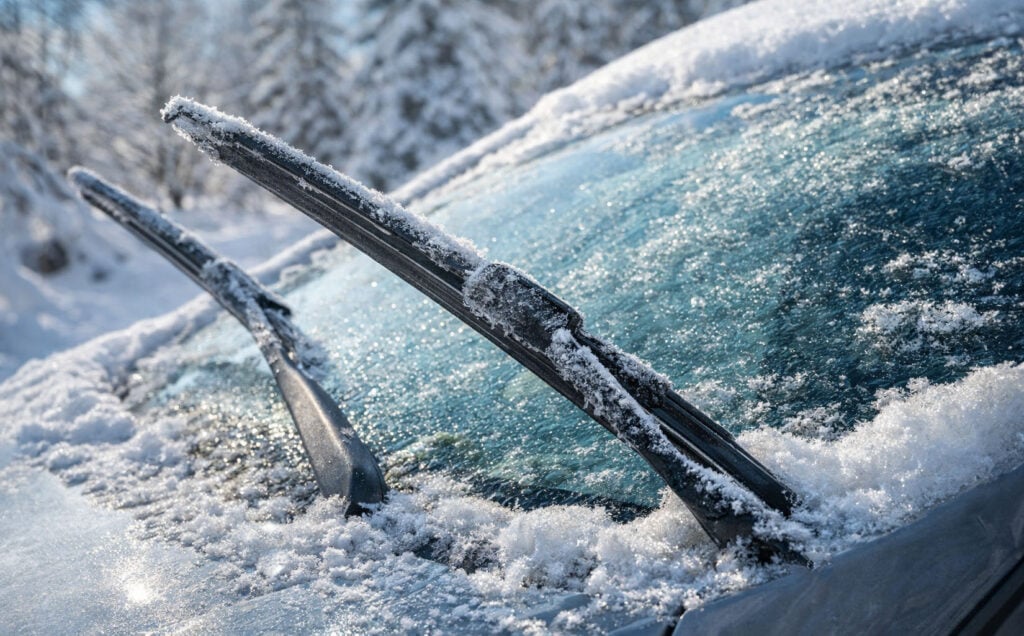
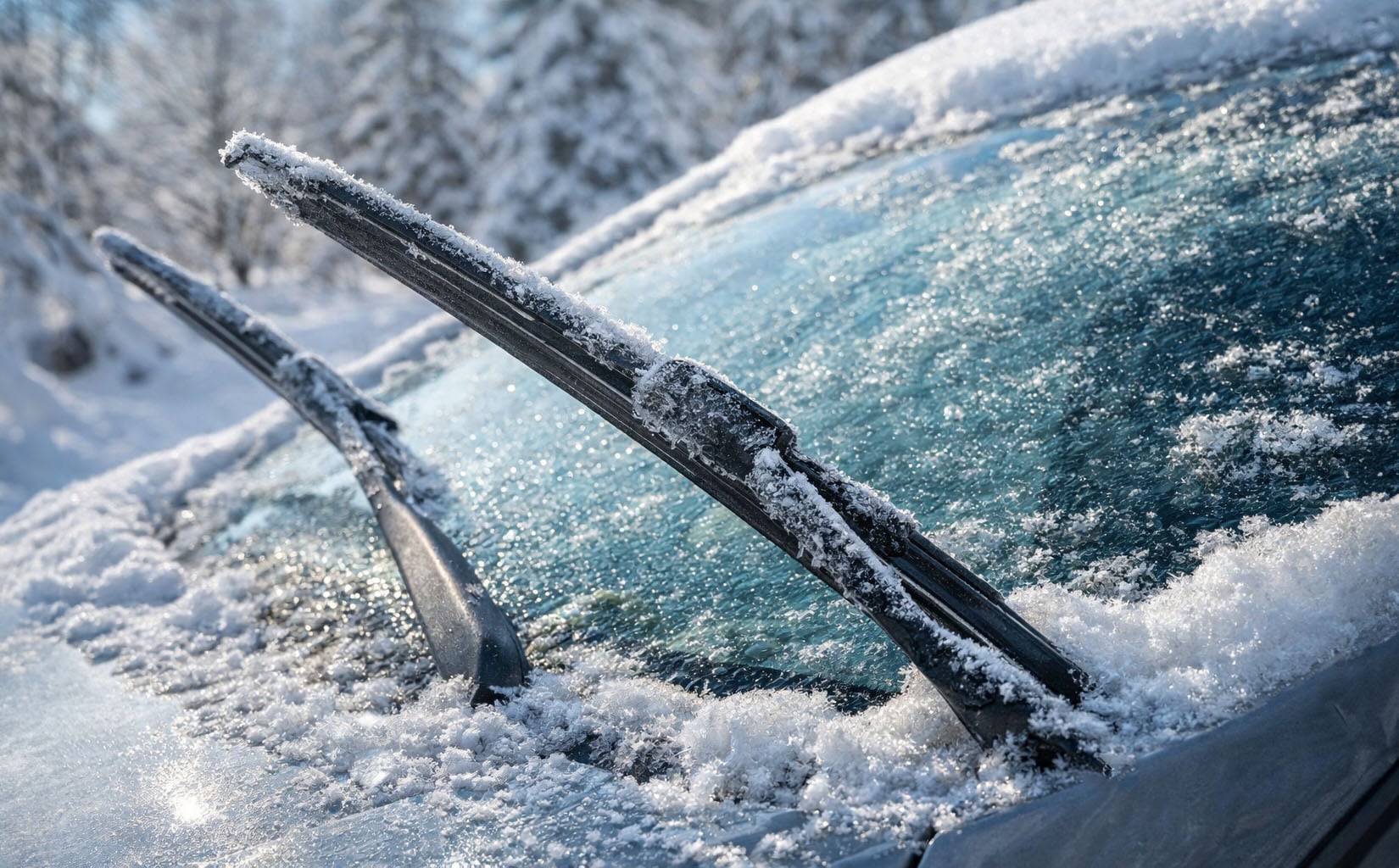
Ice is one of the most damaging elements for windshield wipers. When rubber blades freeze to the windshield, turning them on can tear or crack the rubber. Thick ice can also strain the wiper motor and bend the wiper arms, reducing their ability to make proper contact with the glass.
Snow and Slush
Heavy snow and slush add extra resistance when your wipers are in motion. Pushing snow across the windshield repeatedly can wear down the blade edge, causing uneven wiping and streaks. Snow packed with road salt or grit can be especially abrasive.
Road Debris and Dirt
Dust, sand, leaves, pollen, and road grime all contribute to wiper wear. When debris gets trapped between the blade and the glass, it can nick or tear the rubber and scratch the windshield over time.
Age of the Wipers
Even without harsh weather, wiper blades naturally degrade. Rubber dries out, hardens, and cracks as it ages, especially when exposed to sunlight and temperature changes. Most wipers last about six to twelve months under normal conditions.
A Damaged or Pitted Windshield
Chips, cracks, or pitting on your windshield create an uneven surface for the blades. This can cause the rubber to wear out faster and may lead to skipping or chattering during use.
Tips to Prevent Wiper Damage
While windshield wipers will eventually wear out, a few simple habits can help extend their life.
- Lift your wipers away from the windshield during ice storms to prevent freezing.
- Never use your wipers to scrape ice. Use an ice scraper or windshield de-icer first.
- Clear heavy snow off your windshield before driving.
- Clean your windshield and wiper blades regularly to remove dirt and debris.
- Avoid running wipers on a dry or dusty windshield.
- Park in a garage or shaded area when possible to reduce sun exposure.
These small steps can help keep your wipers functioning properly for longer.
When Wiper Replacement Is Inevitable
No matter how careful you are, windshield wipers are a wear-and-tear item. Replacing them regularly is part of routine vehicle maintenance.
Signs Your Wipers Need to Be Replaced
- Streaks or smears across the windshield
- Skipping or chattering while wiping
- Squeaking noises
- Visible cracks, tears, or missing pieces of rubber
- Reduced visibility during rain or snow
If you notice any of these signs, it is time for new wiper blades.
How to Replace Your Windshield Wipers
Replacing windshield wipers is usually quick and inexpensive, and most drivers can do it themselves.
Finding the Right Wipers for Your Vehicle
Wiper blades come in different lengths and attachment styles. To ensure a proper fit:
- Check your owner’s manual
- Use an online vehicle lookup tool
- Ask an auto parts professional for assistance
Most vehicles use different sizes for the driver and passenger sides, so be sure to confirm both.
Understanding Wiper Blade Quality
Not all wiper blades are the same. Common types include:
- Conventional blades: Affordable and suitable for mild climates
- Beam blades: Better performance in snow and ice, more flexible
- Hybrid blades: Combine durability with a sleek design
Higher-quality blades may cost more upfront but often last longer and perform better in extreme weather.
Step-by-Step Guide to Replacing Your Wipers
Below is a general process most vehicles follow. Always refer to manufacturer instructions for your specific model.
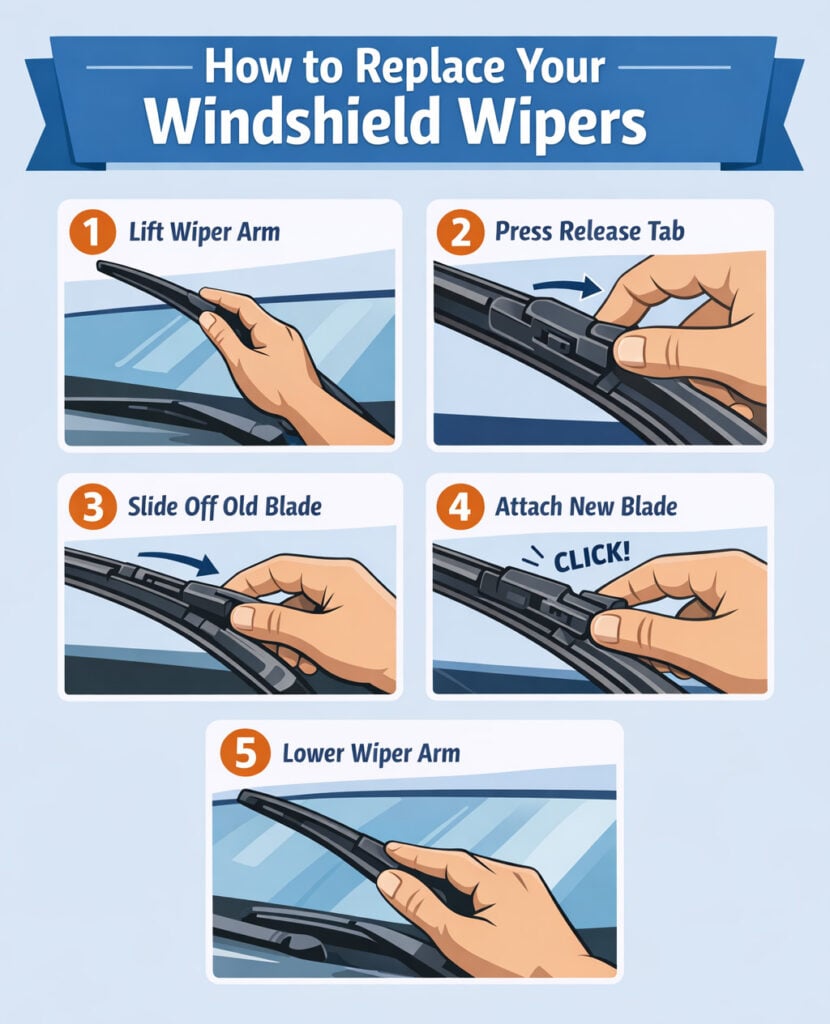
- Lift the wiper arm away from the windshield
Carefully raise the wiper arm so it stands away from the glass. Be sure to hold it firmly so it does not snap back and damage the windshield. - Press the release tab or clip on the old blade
Locate the small release tab or clip where the wiper blade connects to the arm. Press or squeeze it to unlock the blade from the arm. - Slide the blade off the wiper arm
Once released, gently slide the old wiper blade down or away from the arm, depending on the attachment style, until it comes free. - Attach the new blade until it clicks into place
Align the new blade with the wiper arm and slide it on until you hear or feel a click. This confirms the blade is securely attached. - Gently lower the wiper arm back onto the windshield
Carefully lower the wiper arm back onto the glass, making sure the new blade rests flat against the windshield before driving.
When Wiper Issues Point to a Bigger Problem
If your wipers continue to perform poorly even after replacement, the issue may not be the blades themselves. Windshield damage such as chips, cracks, or severe pitting can prevent wipers from making proper contact, reducing visibility and accelerating blade wear.
A damaged windshield can also compromise your safety and the structural integrity of your vehicle, especially in severe weather or an accident.
Find Trusted Windshield Replacement Options Near You
If your windshield damage is affecting visibility or wiper performance, it may be time to consider professional repair or replacement. At AutoGlassEstimator.com, you can use our free quote tool to quickly compare trusted windshield replacement shops in your area.
In just a few simple steps, you can find reliable service options, compare pricing, and choose a shop you can feel confident in, helping you get back on the road safely with clear visibility and properly functioning wipers.