
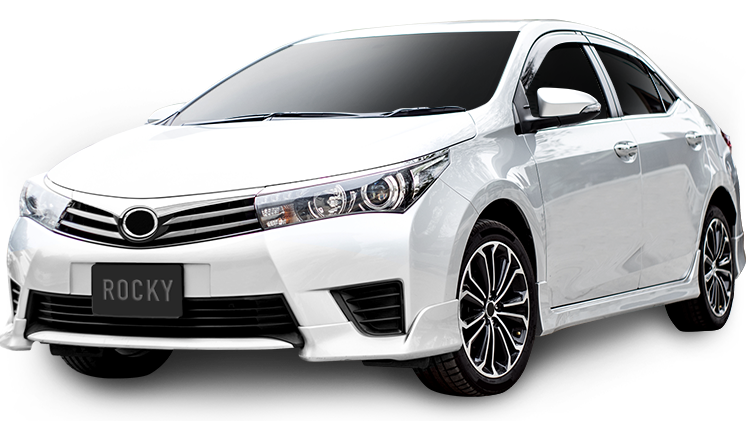
Daewoo Avia Windshield Replacement Cost
The Daewoo Avia, originally a line of commercial vehicles, emerged as an intriguing player in the transportation sector towards the end of the 20th century. Its roots trace back to the acquisition of a formerly state-owned Czech manufacturer by Daewoo in the mid-1990s, exemplifying a unique fusion of Eastern European craftsmanship and South Korean innovation. An interesting tidbit about the Avia’s history is its production of the first co-branded vehicles to carry the Daewoo name post the fall of the Iron Curtain, marking a pivotal moment of industrial collaboration.
When considering the windshield replacement cost for the Daewoo Avia, a variety of factors come into play. One of the most significant determinants is the presence of Advanced Driver Assistance Systems (ADAS). As later model years integrated features such as lane departure warning and adaptive cruise control, the complexity and cost of windshield replacement surged. This is because these systems often require recalibration post-replacement to ensure they function correctly, adding to labor costs.
Trim levels also play a crucial role in the pricing structure. Higher-end trims typically include more sophisticated technologies such as embedded antennae, rain sensors, or acoustic glass, which can increase replacement costs. For the Daewoo Avia, premium trims introduced more advanced glass features necessitating specific expertise for replacement.
The availability of aftermarket parts significantly impacts cost as well. For older models, windshield replacements may be more affordable due to the abundance of compatible aftermarket options. However, as newer model years are introduced with unique windshield shapes and integrated technologies, reliance on OEM parts is often required, thus increasing costs.
Model year changes, such as major redesigns or the addition of sensors, also affect prices. For instance, a substantial redesign in a particular year may introduce a different windshield curvature or surface treatment, resulting in newer, possibly more expensive inventory requirements. Lastly, the continued production and demand for specific parts affect availability and pricing, with rarer windshields often commanding a premium due to scarcity.
These factors combined make the Daewoo Avia an intriguing study in how evolving technology and market dynamics influence the windshield replacement cost, varying greatly depending on the model year, trim, technological advancements, and availability of components.
Get in touch with Auto Glass Estimator™ today to sort out your auto glass problems. We’re here to help!
Daewoo Avia Average Windshield Replacement Cost By Year
Not all windshields are built—or priced—the same. The cost to replace the glass on a Daewoo Avia depends on its year, trim level, and the amount of technology integrated into the windshield itself. Our average pricing reflects real-world replacement data across thousands of vehicles, then adjusts for the specific features found on your Daewoo Avia. Here’s how the range breaks down:
High-End Range
Some Daewoo Avia configurations—especially newer or premium trims—come equipped with Advanced Driver Assistance Systems (ADAS) such as lane-keeping cameras, rain sensors, heated glass, or heads-up displays.
These require OEM-grade glass and a full ADAS recalibration after installation. Because of the precision equipment and labor involved, these versions land at the top end of the price range.
Mid-Range
Many modern Daewoo Avia vehicles include a few key sensors, like forward-collision or lane-departure cameras, but don’t need OEM glass. These jobs involve some recalibration and additional setup beyond a simple install, which places them in the middle of the pricing spectrum.
Low-End Range
Base trims or older Daewoo Avia versions usually feature plain laminated glass with no built-in electronics. These are the most straightforward to replace, requiring no recalibration or specialty parts, and therefore fall in the lowest cost tier.
| Year | Average Price |
|---|---|
| {Year1} | {Price1} |
| {Year2} | {Price2} |
| {Year3} | {Price3} |
| {Year4} | {Price4} |
| {Year5} | {Price5} |
| {Year6} | {Price6} |
| {Year7} | {Price7} |
| {Year8} | {Price8} |
| {Year9} | {Price9} |
| {Year10} | {Price10} |
| {Year11} | {Price11} |
| {Year12} | {Price12} |
| {Year13} | {Price13} |
| {Year14} | {Price14} |
| {Year15} | {Price15} |
| {Year16} | {Price16} |
| {Year17} | {Price17} |
| {Year18} | {Price18} |
| {Year19} | {Price19} |
| {Year20} | {Price20} |
| {Year21} | {Price21} |
| {Year22} | {Price22} |
| {Year23} | {Price23} |
| {Year24} | {Price24} |
| {Year25} | {Price25} |
| {Year26} | {Price26} |
| {Year27} | {Price27} |
| {Year28} | {Price28} |
| {Year29} | {Price29} |
| {Year30} | {Price30} |
| {Year31} | {Price31} |
| {Year32} | {Price32} |
| {Year33} | {Price33} |
| {Year34} | {Price34} |